
Search Richmond County Voter Registration
Georgia My Voter Page, often shortened to MVP, is the first stop for a Richmond County voter checking an individual record. The free tool matches a person to a record through identifying details. It is not an open surname directory and cannot be used to browse everyone with the same last name. Select Richmond as the county and enter the details exactly as they appear on the registration. A failed match may reflect a spelling, county, birth-date, or record-status issue rather than proof that no registration exists.
| Lookup field | Control | Required | How to enter it |
|---|---|---|---|
| First Initial | Text | Yes | Enter the registrant's first initial. |
| Last Name | Text | Yes | Use the registered surname. |
| County | Dropdown | Yes | Select Richmond. |
| Date of Birth | Date | Yes | The full date is used to match the record. |
| Submit/Login | Button | No | Runs the identity match after the fields are complete. |
| Clear/Reset | Button | No | Clears the form where displayed. |
If MVP shows no match or incorrect details, contact the Richmond County Board of Elections rather than trying random identities. County staff maintain the official registration list, while MVP displays a statewide database extract. Be ready to provide the full name and other identifying information staff request through a secure channel. The distinction matters: MVP is built for a voter to inspect a personal registration, while the paid voter-file process serves a separate public-record purpose.
Note: Keep a registration number or confirmation details private when asking the elections office to correct a record.
Richmond County Voter Records Custodian
The Richmond County Board of Elections has served as county registrar and election superintendent since 1973. It holds the official local registration list and resolves status disputes. The office is at 535 Telfair Street, Suite 500, Augusta, GA 30901. Staff can be reached at 706-821-2340, by fax at 706-821-2814, or at richmondelections@augustaga.gov. Published office hours are Monday through Friday, 8:30 a.m. to 5 p.m.
The county route is useful when MVP is wrong, when a voter needs help with a registration change, or when a record needs official review. Election administration material follows another channel. Existing Board of Elections minutes, reports, and nonconfidential exports that are not already online may be requested through Augusta's administrative records system. That route does not make ballots or confidential registration fields public, and it does not require staff to create a new analysis that the agency does not keep.
The official Board of Elections source shown below brings together county contacts, notices, and voter services.
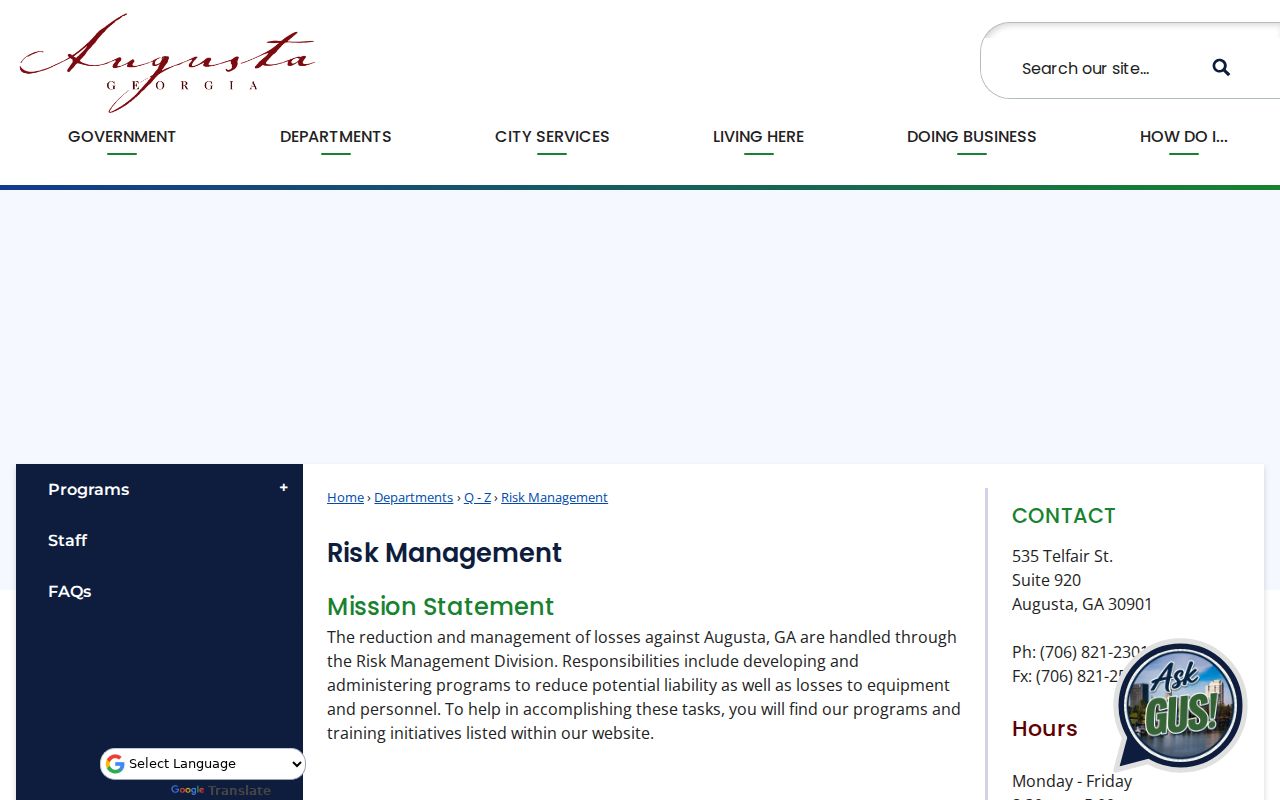
The captured office page helps confirm that local questions and record corrections belong with Richmond County, even when the first lookup occurs in a statewide system.
Richmond County Voter Lookup Results
A successful MVP match gathers practical election information around one registration. Some fields concern the person, while others depend on the registered residence and the current election calendar. Treat the result as a current service view, not as a complete historical file. District assignments can change after redistricting or annexation, and absentee or provisional status relates to a particular election process.
| Registration | Current registration details and status. |
|---|---|
| Voting location | Precinct, polling place, and available early-voting sites. |
| Districts | Congressional, state, and local districts plus listed officials. |
| Election materials | A sample ballot for the applicable election. |
| Mail voting | Absentee application and ballot status where applicable. |
| Provisional ballot | Status information for a provisional ballot where applicable. |
MVP never reveals candidate selections. A sample ballot shows what may appear on a ballot, while participation data can show that a person was credited with voting. Neither item opens the secret ballot. This is a key limit when interpreting Richmond County voter records.
What Georgia Voter Records Reveal
Georgia's purchased voter file is broader than the personal MVP result. Under O.C.G.A. § 21-2-225, its public fields can identify a registration, show its status, place an address within election geography, and provide administrative dates. Read related fields together. Status should be paired with status reason, last modified date, and date of last contact. A registration date may predate a later move within Richmond County, so it does not always date the displayed residence.
| Name | Split into first, middle, last, and suffix fields. |
|---|---|
| Residence | Separate street and unit parts, city, and ZIP; VoteSafe can suppress a qualifying address. |
| Party | Georgia does not register voters by political party. |
| Participation | Date last voted may appear, but ballot choices never do. |
| Birth information | Birth year may appear; the full date stays excluded. |
| Status | Read active or inactive with the stated reason and update dates. |
Confidential under Georgia rules. The public voter file excludes telephone numbers, full dates of birth, Social Security numbers in full or part, and driver's license numbers. O.C.G.A. § 21-2-225 governs the public-list split, and VoteSafe shields qualifying residence addresses.
Race and gender are administrative fields in the file. They may be incomplete, stale, or tied to categories used when the record was created. Birth year can help separate two similar names, but it is not enough to prove identity by itself. Preserve the voter registration number when following up because that database identifier is more precise than spelling alone.
Richmond Voter File's 43 Columns
The published Georgia layout contains 43 columns. It begins with county and voter registration number, moves through name and status, separates the parts of the residence address, and then maps the voter to precincts and districts. The final group records registration and maintenance dates. That structure makes the list both a voter roll and an election-geography file.
- Identity: county, registration number, name parts, suffix, and birth year.
- Record state: status, status reason, registration date, last modified date, and date of last contact.
- Residence: street number, direction, street name and type, unit, city, and ZIP.
- Voting geography: county and municipal precinct numbers and descriptions.
- Representation: congressional, State Senate, State House, judicial, commission, school, city, water, fire, and other district fields.
- Local geography: municipality, combo, land lot, and land district.
Richmond County's consolidated Augusta government sits alongside the incorporated cities of Blythe and Hephzibah. Municipality and city-council fields can therefore help distinguish the local jurisdiction attached to a registration. District data should be saved with the file date because boundaries may later change.
Georgia Voter Participation Limits
Georgia voters do not enroll by party. Choosing a party's ballot style in a primary is an election-history fact, not a standing party-registration label and not proof of political affiliation. Likewise, a date last voted shows credited participation only. It does not disclose a candidate choice, a response to a ballot question, or any other content of the secret ballot.
Can a Richmond County voter record show how someone voted? No. Public data may reflect participation or a primary ballot style, but it never reveals marked selections. Claims that convert participation into a candidate preference go beyond the record.
This distinction protects both accuracy and ballot secrecy. Use participation fields only for the limited fact they record, and do not infer beliefs from them.
Note: A sample ballot lists possible contests and choices; it is not a copy of any voter's completed ballot.
Richmond Voter Status Changes
An active record generally reflects contact within five years through activity such as voting, an absentee request, a petition, or an address update. After five full calendar years without activity, officials may send confirmation mail. If the voter does not answer within 40 days, the record can become inactive. Inactive is not the same as cancelled, and an inactive voter may still vote.
- Active: the record reflects qualifying contact within the maintenance period.
- Confirmation: extended inactivity can trigger a mailed notice and response window.
- Inactive: no timely response may change the status, but voting remains possible.
- Cancellation eligibility: two more even-year general elections without contact may lead to the next step under the maintenance process.
Death, a move to another state, felony status, the voter's own request, and extended no-contact procedures can also affect cancellation. A family member reporting a deceased voter can use the Secretary of State's voter registration cancellation channel, which states a processing time of one to two weeks. When reviewing a list, pair the status with its reason and dates instead of treating one label as the whole record.
VoteSafe Protects Richmond Addresses
VoteSafe protects the residence address of a qualifying Georgia resident and registered voter who is under a protective or restraining order or lives in a family-violence shelter. The real residence address is still used for voter registration administration, but it is withheld from public voter information. That protection is an important exception to the address fields ordinarily found in the purchased list.
VoteSafe is not a universal erasure tool. Its voter-record protection does not automatically remove an address from deeds, assessments, court files, business filings, or other records held under different laws. A person with a safety concern should not assume that suppression in the voter roll changes every independent source.
Address protection has a defined scope. A suppressed VoteSafe residence must stay protected in every voter-record channel, including county follow-up, administrative exports, and paid list delivery.
Order Georgia Voter Registration Files
The Georgia Secretary of State publishes the voter-list order instructions and request materials. A Richmond County full list costs $70 under the price policy adopted July 15, 2024. County and local files arrive as CSV files, while the statewide file is text formatted for import. Delivery is by email, the stated estimate is about two weeks, and expedited or custom orders are not offered.
- Choose the list type and geography. Options include statewide, county, municipality, district, or precinct, with active-only or active-and-inactive selections where offered.
- Complete purchaser, billing, email, contact, and telephone fields. A billing street address is required rather than a post office box.
- Describe the order and enter municipality, district, or precinct numbers when the selection calls for them. Sign the use certification.
- Pay online by card or send a check or money order to the Georgia Secretary of State. Starter checks are not accepted.
- Allow for email fulfillment. The order terms state no refunds and no custom or expedited orders.
Other published prices include $45 for a county district, $35 for up to five county precincts, $65 for a municipal full list, $125 for a U.S. congressional district or judicial circuit, $75 for a State House district, $95 for a State Senate district, and $485 statewide. A returned check carries a $40 charge. Questions about the order can be sent to electionsvoterlist@sos.ga.gov.
Georgia bars commercial use of voter lists. O.C.G.A. § 21-2-601 makes prohibited commercial use a misdemeanor. Public access also never permits stalking, harassment, threats, impersonation, or identity fraud. Keep protected fields out of any downstream copy and use the data only for a lawful purpose allowed by the signed certification.
Historical Richmond County Voter Rolls
Modern Board of Elections administration begins in 1973, so older poll books and registration registers need a different search path. Start with the Georgia Archives catalog and county holdings, then check the Virtual Vault for digitized indexes and images. Older records may sit under the county ordinary, probate, or election-superintendent series rather than under a modern elections-office name.
The Augusta-Richmond County Public Library System is another useful local route for catalog and historical research. Poll books can be organized by ward, militia district, precinct, or election date. Their fields should not be assumed to match today's digital status codes. Exact Richmond County poll-book series and inclusive years were not verified in the available official material, so confirm a catalog description before planning a visit or copy request.
Historical registration evidence can support civic or family research, but it is a record of a particular election system and date. County boundaries, precinct names, and eligibility rules changed over time. Preserve the original heading, date, and jurisdiction with any extracted name.